BYD Sealion 7 vs XPeng G6: Charging, Space and Buying Costs
Choose between Sealion 7 and XPeng G6 by checking three practical differences: charging on the stations you can use, room for your passengers and luggage, and the support included in the complete offer. They are relevant electric family SUV alternatives, but neither model name fixes its battery, production update or regional equipment. A used G6 must not inherit the charging claims of the newer European version.
| Decision | Sealion 7 | XPeng G6 |
|---|---|---|
| Version identity | Market, battery, grade and RWD/AWD | Market, production update, battery and RWD/AWD |
| Charging | Vehicle and station conditions recorded | Same window and conditions; verify update |
| Family task | Same seats and luggage trial | Same seats and luggage trial |
| Cost | Complete quotation at chosen handover point | Equivalent inclusions and delivery boundary |
Identify which G6 and which Sealion you are comparing
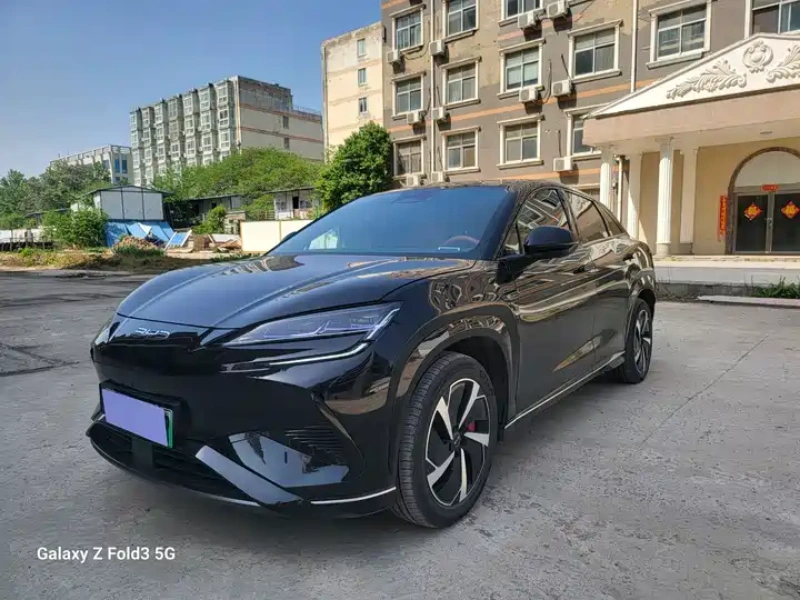
Use a version row for original market, factory designation, production period, battery and drive layout. XPENG announced a European G6 battery and charging update in June 2025; that announcement does not describe every earlier G6. Keep China-market Sealion 07 EV separate from the UK Sealion 7 grade list until equipment is evidenced. Match RWD with RWD or explicitly explain why an AWD premium matters to your task. A sale year is not a reliable substitute for factory model identification.
Compare charging time under usable conditions
Request the supported connector and a charging record with starting and ending charge, battery condition, temperature and station information. Compare a similar charge window, not one car at its peak against the other across a complete session. The difference matters most when your usual route has suitable stations and you regularly need rapid charging. If you mostly replenish overnight, investigate the AC supply and daily energy requirement instead. Do not turn a manufacturer announcement into a guaranteed time at an unspecified public charger.
Related checks: BYD Sealion 7 Home Charging: 7 kW or 11 kW?.
Keep range estimates on the same basis
First compare manufacturer figures only when the market, version and test cycle match. Then plan the journey using your own speed, weather, load and charging reserve assumptions. A CLTC figure and a WLTP figure should not be ranked as if measured identically. Larger stated capacity alone does not establish longer real-world range. For a used car, battery assessment and charging behaviour provide separate information that a launch specification cannot supply. Identify the assumptions behind a route estimate so both offers can be tested fairly.
Try the rear seats and luggage opening
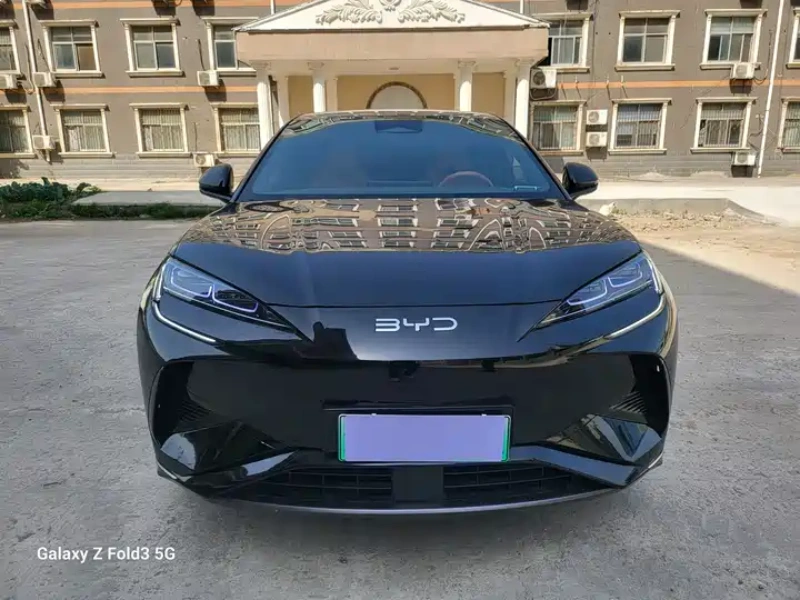
Set the front seats consistently, check rear headroom and demonstrate entry with the actual household. Use the same permitted child-seat arrangement and luggage, with the required seats available. Inspect the cargo opening and floor rather than choosing from a litre figure whose measurement convention may differ. Try visibility and manoeuvring in a representative parking space. Coupe-influenced styling in both models does not prove equal headroom or that a stroller clears the opening; a physical trial can resolve this more reliably than exterior photos.
Make software and repair support part of acceptance
Demonstrate the supplied keys, owner-account handover, installed language, parking displays and needed charging menus. Separate driver assistance from autonomous driving and confirm regional limitations. Ask a destination workshop about diagnostics, parts and the exact battery system. For used examples, review repair and inspection findings; for new stored stock, confirm preparation and registration status. A current connected-service feature on the brand website is not proof that an imported vehicle can use it at your destination.
Choose with a like-for-like complete quotation
List vehicle cost, known preparation, charging equipment, transport, delivery point and exclusions for both candidates on the same quote date. Put essential features in writing. G6 may be more attractive if a proven charging or cabin advantage benefits your use and has dependable support. Sealion 7 may be the stronger offer when its inspected condition, fit and service plan meet the same task at a better total cost. Neither a lowest advertised price nor a newer update provides a universal winner.
What to request before ordering
- Original market and production update for each car.
- Equivalent charging window and range test basis.
- Same passenger and luggage trial, not brochure volume alone.
- Regional software support and equal written quotation scope.
Questions buyers ask
Does every G6 have the newer battery and charging hardware?
No. Match the factory version and market to the applicable technical record.
Which charges faster on my route?
Establish the actual versions and station conditions, then compare a similar energy or charge window. A universal answer from peak power alone would be misleading.
Which has the better boot?
Try the same luggage with the required seats available. Access and usable shape can matter more than a published litre figure.